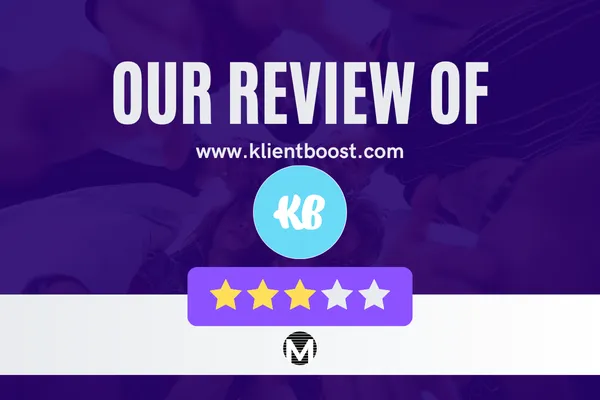
Klientboost - Can you Trust this Agency?
KlientBoost: An Investigative Industry Breakdown
What the Agency Claims, What the Data Shows, and What You're Actually Buying
1. Introduction
KlientBoost's homepage opens with a headline that reads: "The Performance Marketing Agency That Hits Bigger & Bigger Goals." The subheadline positions the agency as offering "aggressive accountability & proactive obsession." As of Q1 2026, the site claims to have hit 88% of client goals.
The promises are specific. The language is calibrated. The social proof is stacked — Airbnb, NPR, Stanford, Bloomberg, Upwork. Clutch lists nearly 400 verified reviews averaging 4.9 stars. G2 is similarly stacked with glowing testimonials.
But any thorough look behind that surface reveals a more complicated picture — one shaped by high staff-to-client ratios, documented employee churn, serious internal governance questions, a Trustpilot score sitting at 2.6 out of 5, and a pattern across multiple insider sources that paints an operation under structural strain.
This article draws on data from:
No insider testimony was provided for this analysis. Glassdoor and public forum data are treated as anonymous employee perspectives — not confirmed facts — and are framed accordingly throughout.
The goal is to help a business owner understand the full operating picture before writing a check.
2. Pricing & Offer Structure
KlientBoost does not publish flat-rate pricing. The pricing page routes visitors into a "free marketing plan" form — a lead capture mechanism that stages the sales conversation before any numbers are on the table.
Clutch data gives a clearer signal: the most common project size bracket is $10,000–$49,999, representing the majority of 326 tagged reviews. Hourly rates are listed at $100–$149. Minimum project size starts at $1,000, but this appears to be a floor designed to qualify micro-projects — the actual engagement cost for meaningful scope runs significantly higher.
One Trustpilot reviewer noted that KlientBoost quoted them 4x the price of their current agency during a cold audit. That's not necessarily disqualifying — premium agencies command premium fees — but it raises a structural question: who is underwriting the risk?
Here's the risk architecture as it stands:
The client pays a management fee regardless of performance. There is no published performance guarantee, no claw-back mechanism, and no outcome-based pricing structure documented publicly. KlientBoost collects monthly regardless of whether campaigns convert. The agency carries brand risk; the client carries financial risk.
That's a standard retainer model. But it becomes relevant when you cross-reference it with the complaint data — where underperformance on KPIs continued despite ongoing billing, and clients reported difficulty exiting contracts.
One Clutch reviewer described being "completely unaware" of a 12-month contract they'd reportedly agreed to, only discovering it when they requested a two-month pause after seven years of month-to-month business. Whether this reflects a sales communication failure or a contract structure designed to retain revenue through inertia is a judgment call. But it's a documented pattern, not an isolated anecdote.
The structural reality: The "free marketing plan" offer is a sales funnel, not a diagnostic tool. Pricing is custom, which means the client has no anchor for what they should pay. And once engaged, the contract terms — whatever they are — carry more weight than the agency's verbal positioning around flexibility and accountability.
3. Review Data Analysis
Clutch (397–398 reviews, 4.9 average): The dominant signal is positive. Top mentions across reviews include "communicative" (124), "timely" (61), "knowledgeable" (59), "results-oriented" (39), and "transparent" (37). The volume is legitimately impressive for an agency of this size. Clutch reviews are phone-verified by a third party, which gives them more credibility than most platform reviews.
The dissenting signal, however, is also documented. Clutch's own review synthesis flags "challenges with employee turnover" as a confirmed pattern affecting project continuity. One long-term client described a "seven-year journey" that started strong but "shifted toward a robotic, task-oriented approach" over time — with the service eventually prioritizing internal metrics over the client's actual goals.
Trustpilot (4 reviews, 2.6 average when weighted against 7 3.5 star reviews, 100% one-star): The sample is tiny, but the content is pointed. One reviewer directly accused founder Johnathan Dane of using access to their Google Ads account — granted during an audit — as a bargaining chip, with Dane allegedly asking whether he could take their marketing plan to a competitor if they declined to hire the agency. This is a serious allegation. It has not been verified independently, and KlientBoost has not publicly responded to it. The account has not been disputed on the platform. It sits there unaddressed.
G2 (multiple reviews): Aggregated complaint data from G2's pros/cons system identifies "expensive" as the top negative mention (7 instances), followed by "communication issues" (4 mentions) and "inefficiency in strategies" (2 mentions). G2 also flags "lack of access to subject matter experts due to bandwidth constraints and multiple clients handled by KlientBoost" — a structural complaint, not a personality one.
DesignRush: One reviewer described their experience as "a complete dumpster fire." The reviewer cited across-the-board KPI deterioration — ROAS, purchase volume, conversion rate, and cost per acquisition all worsened after KlientBoost took over. They paid an additional $1,500 for creatives that didn't perform.
The pattern that emerges: Satisfied clients exist in volume and are concentrated in companies with dedicated internal resources, budget for iteration, and long enough timelines to absorb ramp-up. Dissatisfied clients cluster around: small-to-mid-size businesses with limited internal bandwidth, short engagement windows (less than 90 days), and situations involving staff turnover mid-engagement.
4. Execution Breakdown
The operational question for any performance marketing agency comes down to three things: how many accounts does each strategist carry, how fast do they test, and how good is the creative.
On staff-to-client ratios, one former employee noted the following on Glassdoor (presented as their observation, not verified fact):
"Notorious client load for every position with a priority toward speed over quality. Average client load: Performance Marketing Account Manager: 15–17 accounts. Paid Strategist: 13–15 accounts (plus some with multiple platforms). CRO Strategist: 25–35 accounts."
If accurate, these numbers represent a significant execution constraint. A paid strategist managing 13–15 accounts — each with different industries, ad platforms, funnel stages, and creative requirements — cannot give each account the iteration velocity required for meaningful testing. This isn't a KlientBoost-specific criticism; it's a fundamental tension in any agency model that grows via client volume rather than client quality.
The math: assume a 40-hour work week. Split across 15 accounts, that's 2.7 hours per account per week. Subtract time for client calls, reporting, internal meetings, and admin. The time left for active campaign optimization is thin.
This is consistent with client complaints about a "robotic, task-oriented approach" and the G2 flag about limited access to senior subject matter expertise. It's also consistent with Clutch's note that some clients experienced "challenges with project continuity" during staff transitions.
Where KlientBoost does appear to execute well, based on consistent positive signals: campaign setup and structure, onboarding documentation, communication tooling (Asana and Slack are frequently cited positively), and initial strategy presentation. The "free marketing plan" that leads into the sales process is described by multiple prospects and clients as genuinely thorough — technically detailed for marketing operators, accessible for executives.
The drop-off appears to happen when the initial momentum fades. Month one and two are well-resourced; the long tail of an engagement, particularly when client relationships are handed off due to staff turnover, is where the quality gap opens.
5. Insider Testimony
No formal insider testimony was provided for this analysis. However, Glassdoor contains 212 employee reviews with enough signal to identify structural patterns. These are anonymous accounts — unverified, potentially incomplete, and subject to individual bias. They are presented here as perspective, not fact.
On client load and retention: Multiple former employees independently described client churn as "regular" and "constant." One noted that strategists carry 10–12 active accounts at a time and described the company as "always in a state of onboarding new clients," making it difficult for teams to achieve deep account expertise. The churn was framed not as an occasional event but as a structural feature of the business model.
On the sales-to-delivery gap: Several accounts describe a pattern where sales teams signed clients without adequate fit qualification — "any client with or without a pulse," as one former employee put it. The downstream effect: strategists received accounts that were unlikely to perform given budget constraints, niche positioning, or unrealistic timelines that had been set during the sales process. This is a specific and operationally significant claim. It aligns with the client-side data showing underperformance concentrated in smaller engagements with limited ad spend.
On leadership dynamics: A recurring theme in the most critical Glassdoor reviews is concentrated decision-making authority at the founder level, with limited autonomy extended to directors or senior staff. One account described a leadership structure where dissent was discouraged and departure — voluntary or forced — was common among those who pushed back. Dane himself responded publicly to one such Glassdoor review, acknowledging that retention was "something we can always get better at" while disputing other specific claims.
The co-existence of genuinely positive employee reviews alongside these critical ones is real. The positive reviews tend to emphasize team culture, flexibility, and learning opportunities. The critical ones emphasize structural dysfunction above the team level. Both can be simultaneously true in a company of 50–249 people.
6. Leadership Analysis
Johnathan Dane founded KlientBoost in 2015 after co-founding Disruptive Advertising from 2013 to early 2015. Before entering marketing, he played professional basketball in Denmark, graduated from Cal State Fullerton with a BA in Communications, and built an early hustle on Craigslist — car detailing, ad copywriting. He has lectured at Stanford, mentored at 500 Startups, and built a public presence as a performance marketing practitioner.
The agency grew from zero to reportedly $1.5M MRR before plateauing and restructuring. From public LinkedIn posts and interview coverage, Dane clearly understands the craft of paid acquisition at a technical level. His public content — on PPC campaign structure, funnel architecture, and testing methodology — reflects genuine expertise.
Multiple independent sources — Glassdoor reviewers, public dispute threads — describe a company where Dane remains deeply operationally involved in a way that creates bottlenecks rather than leverage. Accountability framing is heavy on the agency's outward-facing materials. But internal accountability structures, based on the pattern of testimony, appear less stable than the brand positioning suggests.
Dane's public response to a critical Glassdoor review — where he addressed specific points including allegations of incentivized reviews — is worth noting. He did not deny offering gift cards for reviews outright; he clarified his interpretation of what was permissible. He acknowledged retention issues but attributed them partly to the nature of service contracts where results aren't guaranteed. This is a partial concession, not a denial.
The behavioral pattern that's consistent across sources: high energy, high visibility, tightly held control, genuine enthusiasm for the craft, and difficulty building management infrastructure that operates independently of his involvement. That's a common founder profile. It becomes a risk factor as the company scales.
7. Incentive Structure Analysis
How KlientBoost gets paid: Monthly retainer, billed regardless of results. Management fee is separate from ad spend. There is no documented performance-contingent compensation structure.
Who carries downside risk: The client. If campaigns underperform, the client absorbs lost ad spend plus the management fee. The agency's financial exposure is limited to reputational damage and client churn.
What happens if performance fails: Based on the available data, the standard response appears to be continued optimization — more testing, adjusted strategy — within the existing retainer structure. There is no evidence of fee reduction, refund policy, or formalized performance remediation protocol published publicly.
The sales incentive structure: Commission-driven sales teams are standard in agencies at this scale. When sales compensation is tied to closed deals rather than client lifetime value or performance outcomes, the incentive favors signing marginal-fit clients over quality-fit ones. The Glassdoor complaint about sales accepting underfunded or poor-fit clients is the predictable downstream of this structure. It doesn't mean the structure is unique to KlientBoost — it's endemic to agency models — but it's the primary driver of the disconnect between the sales experience and the delivery experience.
The review incentive question: This is the most sensitive data point. A Glassdoor reviewer claimed Dane illegally incentivized client reviews with cash or gift cards. Dane's public response acknowledged the practice of compensating people for their time to write reviews, while asserting the reviews were genuine. The distinction between "paying for time" and "incentivizing reviews" is legally and ethically contested territory. Several platforms explicitly prohibit the latter. The volume and pattern of KlientBoost's positive reviews — consistently lengthy, consistently high-scoring — is unusual enough to warrant scrutiny, regardless of how it's labeled.
8. What the Client Is Actually Buying
Strip away the positioning and the deliverable is this:
A team of 2–5 junior-to-mid-level performance marketers, most of whom also manage 10–15 other accounts, will build and optimize paid campaigns (Google Ads, Meta Ads, or both), typically alongside some degree of SEO and/or CRO support, communicated through Asana and recurring virtual meetings.
The quality of what you receive is heavily influenced by:
Which strategist you're assigned. There is significant talent variance in any agency of this size. Account managers described in positive reviews are often named individuals. The experience varies by person, not just by process.
How long you stay. The onboarding phase is where KlientBoost concentrates its sales-adjacent energy. Clients who stay 12+ months and survive one or two staff transitions tend to have more stable outcomes than those who enter with a 90-day window.
Your internal capacity. Multiple positive reviews come from clients with a dedicated internal marketing contact who can translate agency strategy into business reality. Clients who handed over the keys entirely — with no internal oversight — had mixed results.
Your budget. Sub-$5K/month ad spend accounts are unlikely to generate enough data volume for meaningful testing within a 90-day engagement. If the sales team didn't flag this at intake, the client absorbs the cost of a learning period that produces no conclusive signal.
The "crowdsourcing performance data from 250+ active clients" claim on Clutch is worth flagging. This is a positioning statement about pattern recognition across accounts — it suggests strategic advantage from scale. Whether this actually translates into faster campaign learning for any individual client is not documented in a way that can be independently evaluated.
9. The Reality Section
What KlientBoost does well:
The content operation is legitimately strong. Their blog, case study library (300+ published), and educational content reflect real craft investment and contribute to organic lead generation at a level most agencies don't match. The onboarding process is well-documented and thorough. For companies with $15K+/month ad spend, aligned internal resources, and a 6–12 month timeline, the probability of a positive outcome is meaningfully higher than the negative reviews suggest.
The agency has worked with real enterprise clients. Airbnb, NPR, Upwork, Stanford — these aren't logo-farming relationships. The Clutch review base is large enough and third-party verified enough to treat the positive signal as real.
Where it fails:
The client load per strategist creates a structural ceiling on quality. There is no public evidence this has been resolved. Employee churn feeds directly into client experience degradation — when a strategist who knows your account leaves, their replacement starts from scratch on institutional knowledge. This is a documented complaint across Clutch, Glassdoor, and G2.
The sales process sets expectations the delivery operation cannot consistently meet for smaller accounts. The pricing is opaque. The contract structure, where it includes long-term commitments, is not clearly surfaced in the sales phase according to at least one long-term client.
The Trustpilot situation — 100% one-star reviews, unresponded-to, with a serious allegation about founder conduct sitting unanswered — is a reputational liability that a company billing itself as accountable should have addressed directly.
10. Final Verdict
Star Rating: 3.0 / 5.0 — Conditionally viable, not universally safe.
Best case scenario: You're a mid-market SaaS or eCommerce company. You have $20K+/month in ad spend. You have an internal marketing person who can interface with the agency. You sign a 12-month contract, survive the first staff transition, and give the campaigns enough time to stabilize. You end up with a communicative team, improving CPA, and a strong CRO layer. This is a real outcome — it's documented across hundreds of Clutch reviews.
Common case scenario: You're a smaller operator with $5K–$10K/month ad spend and no dedicated internal marketing resources. You get onboarded well, the strategy deck looks impressive, and execution starts. Within 60 days, you notice your strategist has changed. Results are slower than expected. You push for escalation and get another meeting. By month four, you've spent $15K–$20K in fees plus ad spend and don't have a clear picture of what went wrong. You ask to pause or cancel and discover the contract terms are less flexible than your sales call implied.
Risk framing:
The agency is not fraudulent. The core service is real. But the positioning — "aggressive accountability," 88% goal attainment — is marketing language applied to an operation with documented accountability gaps. The gap between what's sold and what's delivered is widest for clients who were the worst fit for the model to begin with.
Before engaging: ask explicitly about the strategist assigned to your account, their current client load, and the contract exit conditions. Get the contract terms in writing before the sales conversation ends. Define what "goal attainment" means in measurable terms before signing. And treat the free marketing plan for what it is — a well-produced sales asset, not an objective diagnosis.
Sources referenced in this article: